Recycling equipment
Recycling Shredder
Break down battery cells and packs into smaller fragments to expose internal materials.
Key Takeaways
Shredders are machines designed to reduce materials—such as batteries—into smaller pieces for easier handling and further processing. Several types of shredders are used in battery recycling, each suited to different material characteristics:
- Single-shaft shredders: Typically feature one fast-turning shaft and are typically used as secondary shredders, following an initial size reduction. They are equipped with a sieve and pusher to control particle size, ensuring more consistent and uniform output.
- Double-shaft shredders: Have two counter-rotating shafts that generate high torque, making them effective for tougher materials. They can be used as primary shredders in most cases without a screen.
- Four-shaft shredders: These feature four counter-rotating shafts and are equipped with a screen to ensure fine particle size reduction. They provide high precision and are ideal for delivering uniform output sizes for more controlled downstream processing.
Other specialized shredder types may also be used depending on the application.
The core components of a shredder include cutting knifes, which break down the material, and screening systems, which control the output size and ensure uniform particle dimensions for downstream processing.
What to consider when choosing
What to think about when buying a shredder
- Shredding medium: Decide whether your process requires water (wet shredding), inert gas (e.g., nitrogen), ambient air, or cryogenic shredding—each has implications for safety, discharge requirements, and downstream processes.
- Feed size and material: Choose a system compatible with the input size (e.g., full battery packs, cells, or consumer batteries) and adaptable to different formats and conditions.
- Capacity and scalability: Ensure the shredder meets your current throughput needs and can scale as volumes grow.
- Compatibility with downstream processes: Consider the output particle size and composition to optimize material separation efficiency.
What to look for in a shredder
- Knife material and configuration: Impacts cutting efficiency and contamination levels. Dull or worn blades can increase copper/aluminum impurities and lead to pocket formation—where foils trap active material, reducing recovery rates.
- Shredding stages and technologies: Choose appropriate single- or multi-stage shredding setups based on material type and purity requirements.
- System sealing: Gas-tight, water-tight, or dust-tight configurations are essential for handling electrolyte vapors or preventing particle emissions.
- Ease of maintenance: Ensure the design allows for accessible blade changes, cleaning, and servicing.
- Impurity control strategies:
- Sort batteries by chemistry before shredding to reduce material cross-contamination.
- When processing different chemistries, use campaign-based scheduling and ensure thorough equipment cleaning in between.
- Discuss with vendors how their design minimizes contamination and supports cleaning protocols.
Solutions & suppliers
Verified solutions and the vendors behind them.
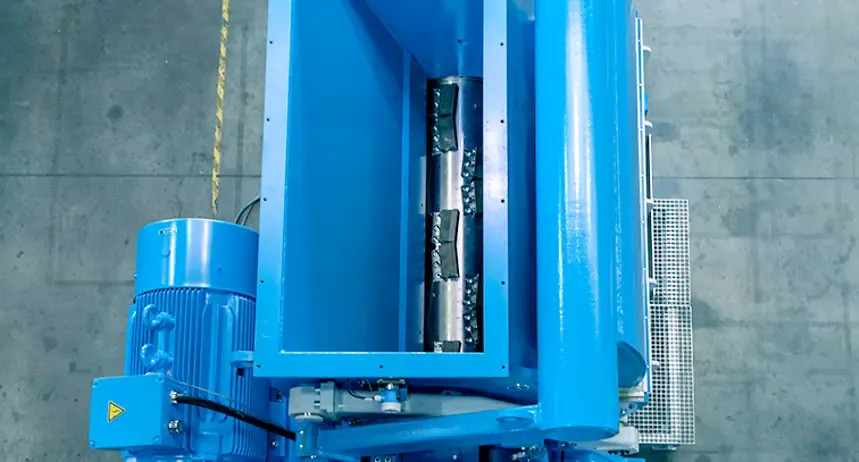
Granulator ADuro G Shredder
ANDRITZ AG
The ADuro G single-shaft shredder enables efficient material processing. Guillotine shear, adjustable knife gap, and granulation screen ensure high throughput and defined particle size.
View solution →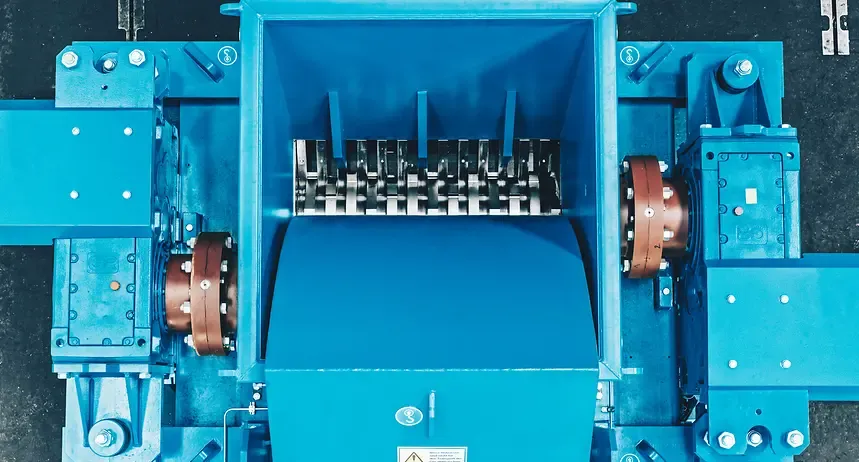
Rotary Shear ADuro C Pre-Shredder
ANDRITZ AG
The slow-running, twin-shaft rotary shear pre-shredder ADuro C operates at variable speeds, using intermeshing blade discs and a pendulum pusher to boost throughput.
View solution →Shredder is one piece of the recycling line
See where shredder fits into the end-to-end battery recycling process.
Back to the full guide →