Industry Workflows / Battery Technology / Module Manufacturing / Lid Assembly & Labelling
Stage 4 of 4 · Battery Module Manufacturing

Battery Lid Assembly & Labelling

The module lid is securely attached to the module frame to ensure the right level of environmental protection is achieved. Labels are then applied to provide assembly serial numbers for traceability, technical specification and safety warnings—completing the module for final testing.

Dr. Gael Chouchelamane
Verified Author

Info Current and Verified · Updated 05/2026

Short Description

Lid assembly and labelling involves securely attaching the module lid or cover to the main body, often incorporating seals or gaskets to achieve required environmental protection (like specific IP ratings against dust and moisture). Following the physical closure, essential labels are applied to the module. These labels carry vital information for identification (part numbers, serial numbers), technical specifications (voltage, capacity), safety warnings, and traceability (barcodes, QR codes). This stage ensures the module is a complete, sealed, and identifiable unit ready for comprehensive end-of-line testing.
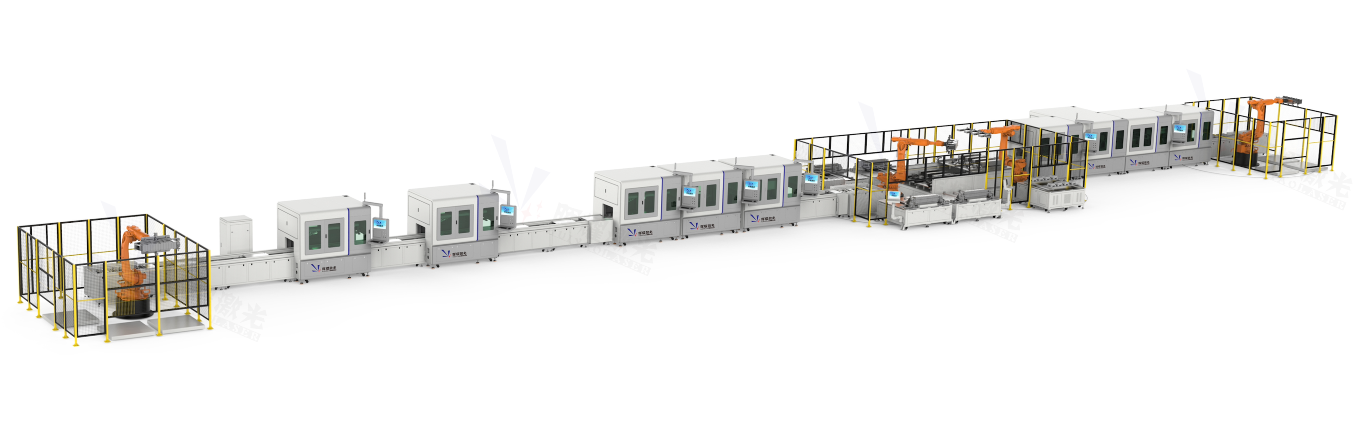
Solutions for the full Lid Assembly & Labelling stage
Prismatic Battery Module & Pack Assembly Line
Prismatic Battery Module & Pack Assembly LineFully & Semi-Automated
EnerLink Systems LLC
Turnkey prismatic battery module/pack assembly line — fully or semi-automated, with ring-beam laser welding, IGOA operator assistance and North American compliance support.
View solution →
Innovation & trends
Automated Vision Inspection for Comprehensive Quality Assurance The use of automated vision inspection systems, which integrated Artificial Intelligence (AI) algorithms, is becoming integral to this stage. These systems can rapidly and reliably verify multiple aspects, including correct lid fitment and alignment, the integrity of seals or gaskets, the presence and proper torque of fasteners (if used), and the accurate placement and legibility of labels or DPM codes. This automated, in-line inspection enhances quality assurance, reduces the chance of defects reaching the customer, and provides valuable data for process control.
Direct Part Marking (DPM) for Enhanced Durability and Traceability A significant trend is the adoption of Direct Part Marking (DPM), most commonly using laser marking technology, to etch permanent identification codes (such as serial numbers, 2D codes like Data Matrix or QR codes, and manufacturing data) directly onto the module casing itself. This offers far greater durability and tamper-resistance compared to traditional adhesive labels, which can degrade, peel off, or become illegible over the module's lifetime, especially in harsh environments. DPM ensures critical traceability information remains with the module permanently.
Advanced Lid Joining & Sealing Techniques Manufacturers are increasingly moving beyond traditional mechanical fasteners towards more advanced techniques for joining module lids to the casing. This includes the exploration and adoption of laser welding for metal enclosures or the use of high-strength structural adhesives. These methods can offer superior IP-rated sealing against dust and moisture, contribute to increased overall structural rigidity of the module, and potentially lead to faster and more automated assembly cycles compared to manual or robotic screwing. Precise application via robotic systems for liquid gaskets (FIPG) or automated placement of pre-formed seals also plays a crucial role in achieving consistent sealing performance.
Continue the process

This is one stage of the full battery module manufacturing workflow

See how Lid Assembly & Labelling fits into the end-to-end Battery Module Manufacturing journey.

Back to the full guide →