Recycling equipment · Part of Battery Recycling
Battery Discharge System
Safely discharge residual energy from batteries before transport, dismantling, or recycling.
Key Takeaways
Electrical discharge units are designed to safely reduce the state of charge of a battery by converting the stored chemical energy into heat—typically via resistive loads—or by feeding the energy back into the grid. The unit connects directly to the battery’s main terminals, often requiring access through the housing and potentially past safety features like contactors, fuses, and the Battery Management System (BMS).
Discharge is controlled through a pre-programmed logic that brings the battery to a defined safe voltage. Throughout the process, temperature monitoring is essential to ensure safe operation, especially in large-format batteries.
What to consider when choosing
What to think about when buying an electrical discharge system
- Dynamic performance isn’t critical — unlike battery testing, discharge units don’t need fast current or voltage control.
- Number of discharge channels: How many batteries will you process in parallel?
- Control method: Do you need manual control, a software interface, or full automation?
What to look for in an electrical discharge system
- Voltage range: Ensure the unit supports your battery’s full voltage window. For very low voltages, switching to resistive discharge may be needed.
- Discharge current: Max current ratings vary with voltage. Always check the supplier's current–voltage graphs.
- Modular design: Can the system scale? Look for units with extendable channels.
- Connection interface: Most batteries require custom cable builds. Is the discharge interface adaptable? Cable lugs are often the most universal solution.
High dynamic response are not needed (unlike battery testing, discharge units don’t require fast current/voltage control).
Solutions & suppliers
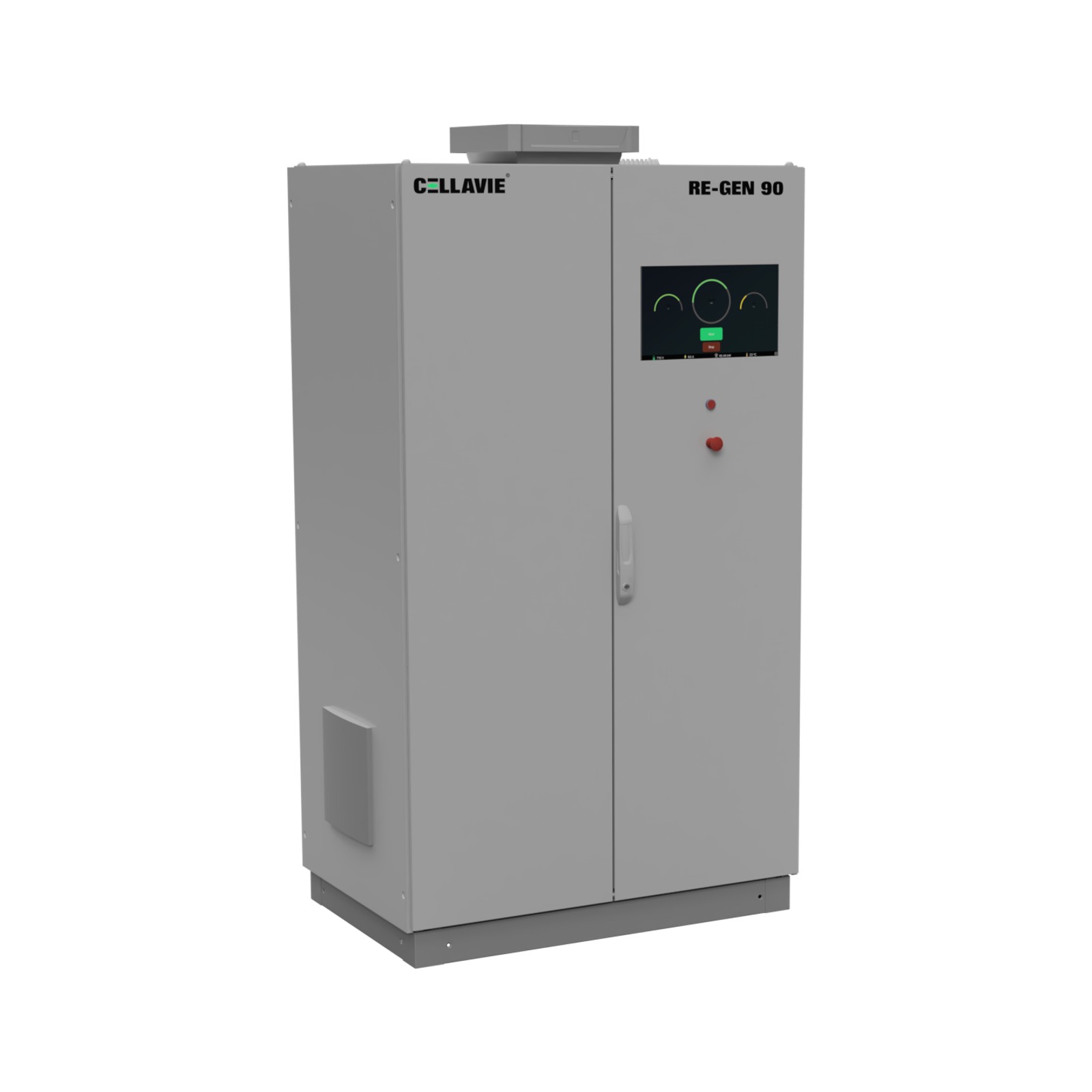
Battery Pack Discharger RE-GEN 90
Regenerative pack discharger bringing HV EV packs (up to 950 V) down to 0 V under live thermal control, feeding up to 90 kW back to the grid or a BESS, recovering energy at a peak efficiency of 96%.Cellavie
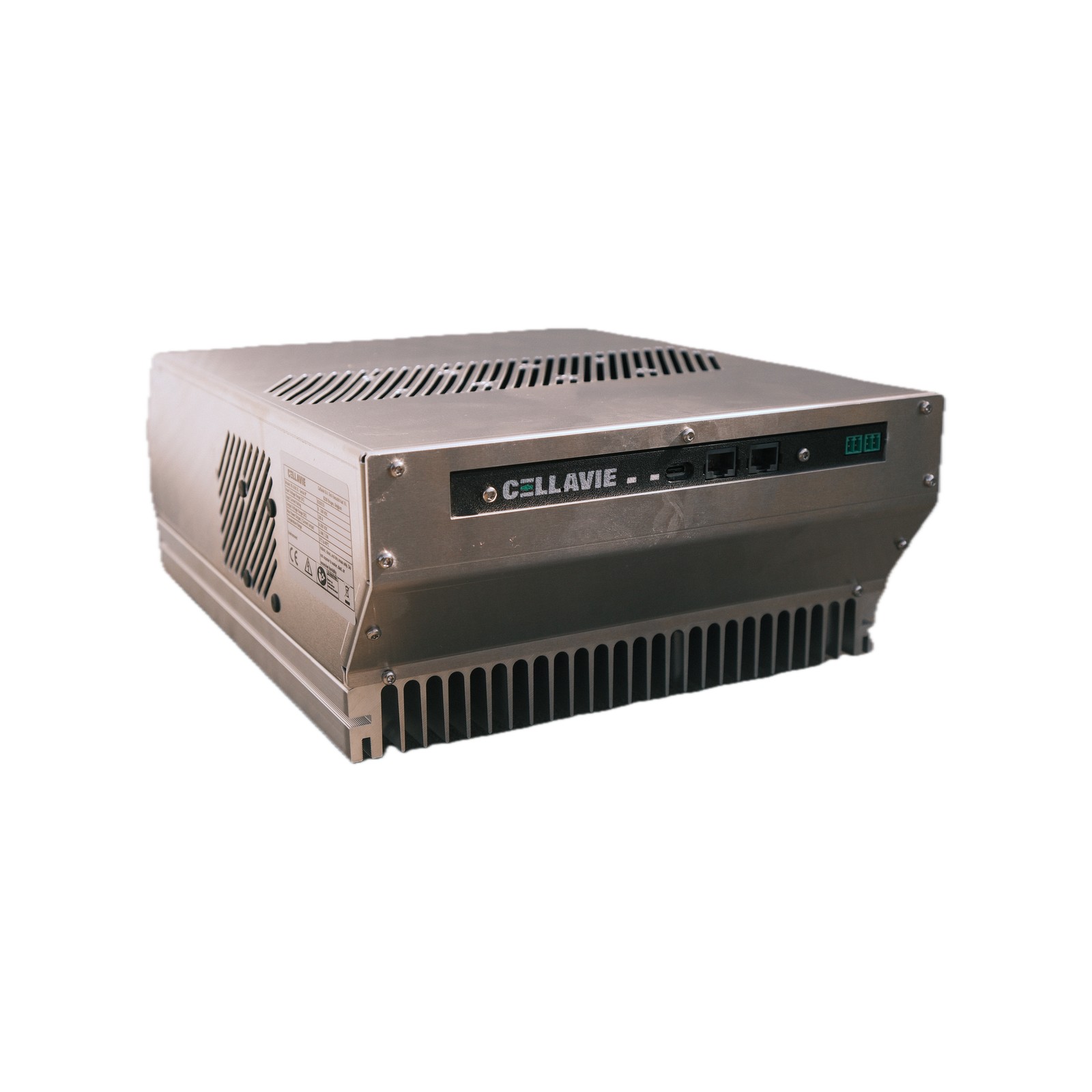
Battery Module Discharger RE-GEN 2
Modular 2 kW deep-discharge units for individual battery modules — up to 24 parallel channels with CANbus control, regenerative via the RE-GEN 90 inverter and 200 V DC bus.Cellavie