Battery Ready
Orientation for people new to EV batteries
Battery Ready is orientation content. It introduces the terms, hazards, and reasoning behind safe battery practices for people new to EV batteries or new to the chemistries now common in the workplace. No prior knowledge is assumed.
- 3 modules11 parts
- About 3 h 12 min
- Slides + video+ self-check
What the modules cover
There are three modules.
- First is Battery Safety Basics which covers what batteries are and the path they travel.
- Safety at Work covers the hazards, the rules behind them, and how to spot when something is wrong.
- Third is Facility Operations and Risk which discusses damaged batteries, thermal events, storage, shipping, and the training that comes next.
Why it matters at work
Electric vehicle batteries now move through manufacturing plants, repair shops, trucks, warehouses, and recycling facilities across Michigan. The information about how to work around them safely hasn’t always reached the people who handle them every day.
Who teaches you
- Elizabeth Gibbons BarberFounder, Empower to ComplyModules 1, 2 and 3LinkedIn

- Neža LupšinaPrincipal Consultant for Battery Safety & Technical Growth, Pyralis AdvisoryModule 1LinkedIn

- Dr. Veronika WrightCEO & Founder, Electrification AcademyModule 1LinkedIn

- Greg BordnerOwner, Bordner EHS ConsultingModules 2 and 3LinkedIn

- Patrick DurhamFounder, StacheD TrainingModule 3LinkedIn

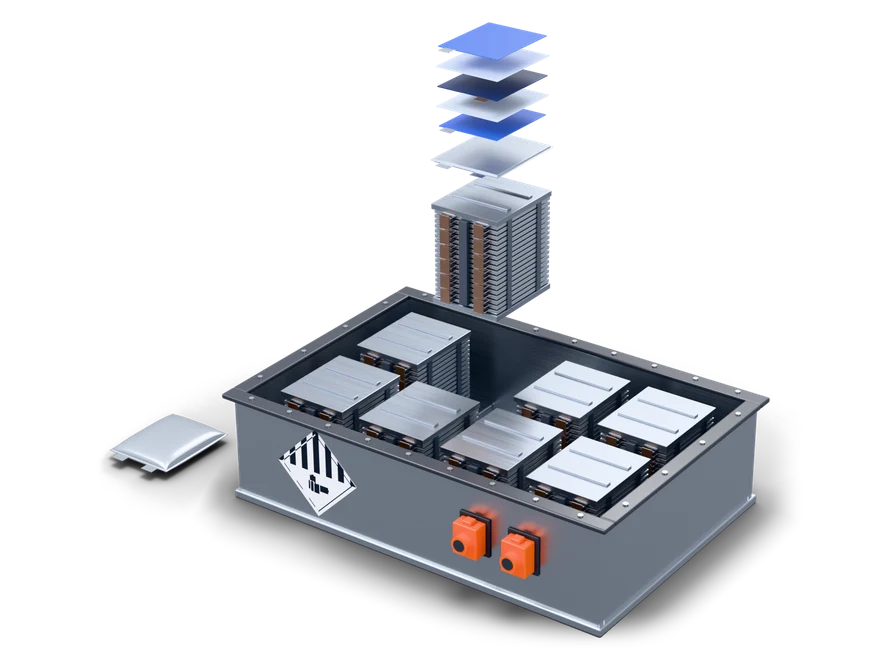
Orientation modules
- Module 1
Battery Safety Fundamentals
The words, the basics and the bigger picture: what this series is, the terms you will hear, how battery types differ, and how a battery moves from manufacturing to recycling.
about 42 minElizabeth Gibbons Barber & 2 others- 1.1Welcome and boundaryVideo + slides5 min
- Glossary: the words you will hearGlossary1 min
- 1.2Battery basicsVideo + slides8 min
- 1.3Why chemistry mattersVideo + slides26 min
- 1.4The lifecycle, where you fit, and why diversion mattersVideo + slides2 min
- Self-check4 questions0 of 4 right
- Module 2
Occupational Safety
Why hazards and controls exist at work: the rules behind them, how to look at a battery before it is handled, and why protective equipment and procedures differ by task.
about 42 minGreg Bordner & 1 other- 2.1Regulatory basicsVideo + slides12 min
- 2.2Workplace hazards and why controls vary by taskVideo + slides23 min
- 2.3Look, assess, escalateVideo + slides3 min
- From the fieldVideo4 min
- Self-check4 questions0 of 4 right
- Module 3
Facility Operations & Risk
How to recognize a damaged, defective or recalled battery and the signs of a thermal event, what is regulated when batteries are stored and shipped, and which training different tasks may require.
about 1 h 48 minElizabeth Gibbons Barber & 2 others- 3.1Damaged, defective, recalled batteriesVideo + slides14 min
- 3.2Recognizing a thermal runaway: warning signsVideo + slides26 min
- 3.3Storage, shipping, training, and next stepsSlides + video24 min
- From the fieldVideo14 min
- Optional webinar: lithium batteries, hazards, rules and battery conditionVideo30 min
- Self-check4 questions0 of 4 right
Open the glossary40 terms in 5 topics, with pictures. You can search it.
About this orientation
One thought at a time
Every part is a short set of slides to click through, with pictures and clips from the shop floor. Go at your own pace.
Short videos
Experts explain the why behind a topic. People who do the work tell what happened to them and what they learned from it.
Self-check and certificate
Four questions after each module, your progress at a glance, and your certificate at the end.