Recycling Rotary Kiln
Heats black mass or battery materials in inert atmosphere to remove binders and organics for material recovery.
Key Takeaways
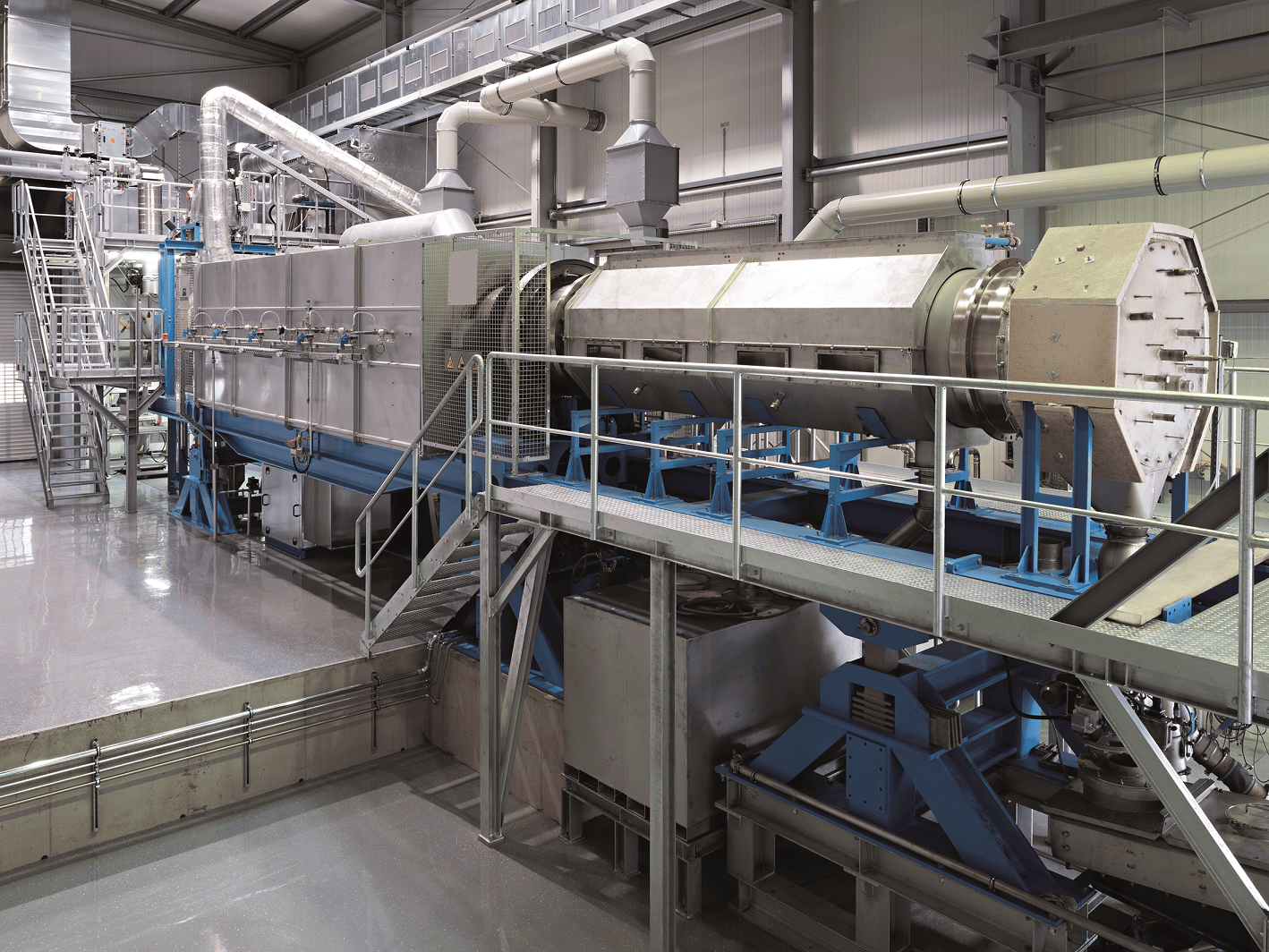
A rotary kiln is a thermal processing system used in both battery recycling and battery material manufacturing. It consists of a long, slightly inclined, rotating cylindrical tube in which materials are heated as they move steadily through the system.
In lithium-ion battery recycling, rotary kilns are a key part of the Material Separation and Material Recovery stages. They are used for pyrolysis — heating black mass or other battery components in an inert atmosphere to remove binders, organics, and harmful fluorine compounds without combustion. This “thermal cleaning” step produces a stable, purified product ready for hydrometallurgical metal recovery.
In battery manufacturing, kilns can be configured for precursor synthesis and active material calcination, offering precise temperature control and atmosphere management for critical material properties.
Rotary kilns are valued for their ability to provide continuous, high-throughput processing with adjustable residence times. They maintain full control over heating profiles, atmosphere composition, and sealing, making them essential where chemical changes must occur without contamination or oxidation.
Modern kilns are often paired with integrated cooling systems and modular offgas treatment to ensure both product quality and environmental compliance.
Common Types of Rotary Kilns in Battery Applications:
- Indirectly heated kilns (no flame contact; ideal for inert or controlled-atmosphere processing such as black mass pyrolysis)
- Direct-fired kilns (rare in battery recycling; used in some high-temperature material synthesis)
- Gas-tight sealed kilns (critical when processing hazardous or reactive materials)
- Mobile or modular kilns (for on-site or smaller capacity recycling operations)
What to consider when choosing
What to think about when buying a rotary kiln
- Material compatibility: Assess how the kiln materials handle corrosion, especially when processing aggressive chemistries.
- Technical specifications: Verify critical parameters such as maximum operating temperature, retention time, atmosphere control (oxidizing/reducing/inert), material handling system, and overall throughput capacity.
- Off-gas system integration: Ensure the off-gas treatment system is properly matched to the kiln to manage emissions and maintain compliance with environmental and safety standards.
What to look for in a rotary kiln
- Application fit: Confirm with the supplier that the kiln design is suited to your specific chemical or physical transformation goals. Sharing detailed process requirements early helps ensure compatibility.
- Fuel type: Evaluate available options (gas, oil, or electricity) in relation to process efficiency, local infrastructure, and sustainability targets.
- Feeding technology: The material feed system must align with your feedstock characteristics (e.g., particle size, moisture content, flow behavior) to ensure steady, reliable operation.
- Technical specifications: Beyond basic parameters, verify design features such as temperature uniformity, residence time control, and seals that prevent unwanted gas leakage.
Solutions & suppliers
Verified solutions and the vendors behind them.
Rotary Kiln is one piece of the recycling line
See where rotary kiln fits into the end-to-end battery recycling process.
Back to the full guide →