
Info Current and Verified · Updated 04/2025
Short Description
Depending on the recycling process, batteries may be discharged to eliminate stored energy and prevent safety risks such as short circuits or thermal events—either as a standalone process or integrated into the recycling system. Some companies also discharge batteries before transport to comply with SOC regulations. Depending on the recycling method, batteries may also be dismantled to remove housings and reduce impurities before shredding, while manufacturing scrap like electrode foils can usually skip these steps and go straight to material separation.
3.1Discharging & Deactivating
This process step is not required in every battery recycling route, but is often critical—either before transportation to comply with state-of-charge (SOC) regulations or as a safety measure before further processing. Discharging aims to safely deplete the battery’s remaining energy to prevent short circuits, thermal events, and risks to personnel or equipment.
Discharge can be carried out through electrical/resistive methods, chemical deactivation (e.g. salt bath), or thermal methods (e.g. vacuum, incineration, pyrolysis). Thermal deactivation can also help remove electrolyte at this stage. The goal across all methods is to reduce chemically stored energy in a controlled and safe way, either as a standalone step or integrated into the recycling process.
Discharging and deactivation are critical steps of the battery recycling process to ensure safety and efficiency. These processes neutralize stored energy, minimizing the risk of thermal runaway and other hazards. There are three primary methods used for discharging and deactivation: electrical discharge, chemical deactivation, and thermal deactivation.
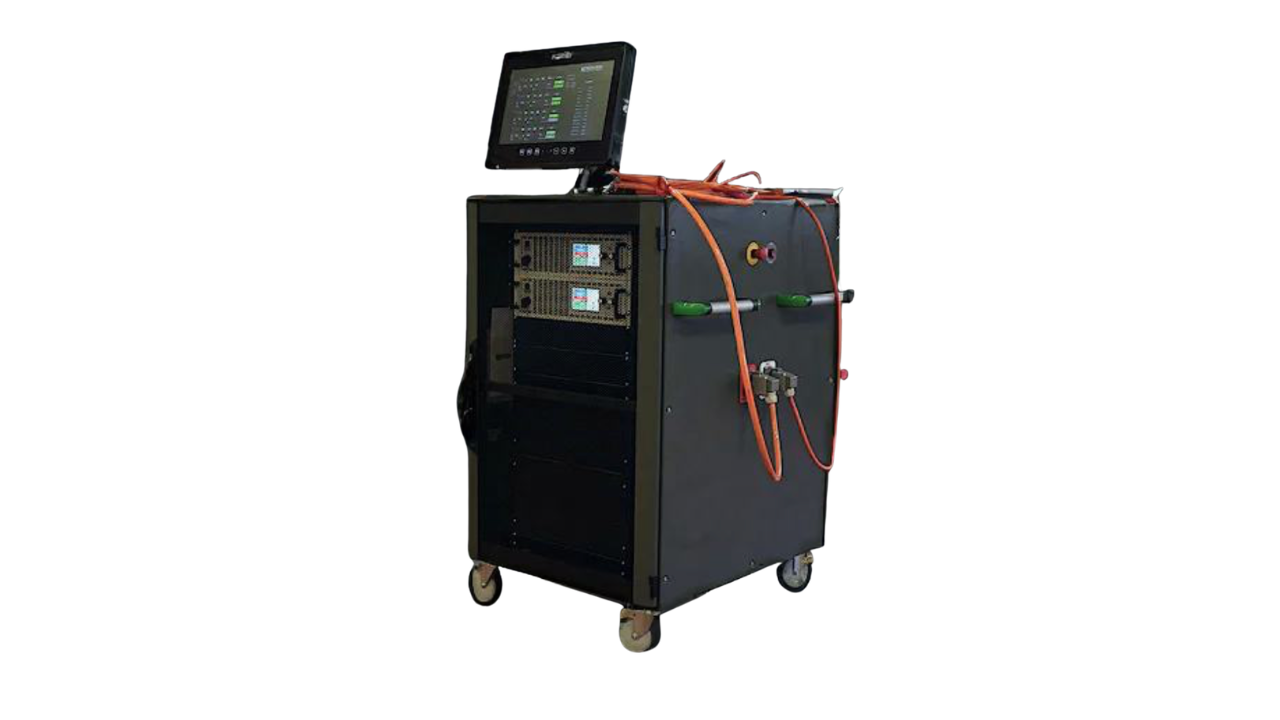
Electrical discharge involves safely draining the battery's stored energy using controlled systems. There are two main approaches to this method: regenerative discharge and resistive discharge.
- In regenerative discharge, the positive and negative poles of the battery are connected to a discharging system programmed to perform the routine automatically according to predefined limits. During the discharging process, the direct current (DC) power is converted into alternating current (AC) power compatible with the electrical grid. This enables the energy to be either fed back into the grid or stored in a stationary storage system, though this requires another AC/DC conversion. For effective programming, it is essential to understand the battery's chemistry, voltage/state of charge (SOC) curve, and architecture, including the number of cells connected in series or parallel.
- In resistive discharge, the battery's positive and negative poles are connected to a discharging load. The system may be programmable or have a set resistance or cascading resistance, which can be adjusted according to the discharge phase and voltage windows. In this method, the discharged DC power is converted into heat, which, aside from potential use for heating the facility, cannot be reused.
Thermal Monitoring: For all electrical discharge processes, thermal monitoring is recommended to detect temperature hotspots and enable timely interventions to prevent overheating.
Depth of Discharge (DoD): Determining how much to discharge the battery is crucial. Whether the target is 0% SOC, 1V per cell, or 0V per pack, the deeper the discharge, the longer the process takes. It is essential to test various DoD levels in the subsequent material separation system to identify the minimum required discharge level for effective processing.
Chemical Deactivation involves immersing the battery in a brine solution. This method depletes the chemical energy either through an electrolysis process, where the battery's electrodes act as an anode and cathode generating hydrogen, or by allowing the brine solution to penetrate the cell and deactivate it.
This approach is particularly suitable for compromised batteries or single cells where connecting each unit to a discharging system would be impractical due to the sheer number of channels required. However, after processing multiple batches, the used brine solution contains traces of electrolyte and requires specialized wastewater treatment before disposal.
Thermal deactivation involves placing charged batteries in a furnace and heating them until they are safely neutralized. Several furnace types can be used for this purpose, including rotary kilns, batch furnaces, vacuum furnaces, and retard furnaces. During the process, the batteries contribute to the heating through self-heating. This process removes the electrolyte, destroys the separator, and degrades the binders.
Each method has its own advantages depending on the battery type and condition. Proper selection and execution of these processes are essential for safe, efficient, and environmentally responsible battery recycling.
Rebound after deep discharge+
Electrical discharge can lead to a rebound effect, where the battery voltage temporarily rises after disconnection due to the difference between Open Circuit Voltage (OCV) and Closed Circuit Voltage (CCV). The deeper the discharge, the greater the rebound—especially in older or degraded batteries. To minimize this effect, a small resistor or short-circuit cable can be connected immediately after discharging to stabilize the voltage. This is important because voltage rebound can lead to misclassification of the battery's safety state, posing risks during storage, transport, or further processing. Inaccurate voltage readings can also affect the sequencing and safety settings in automated recycling systems, especially in dry shredding or thermal treatment.
Determining the required depth of discharge+
One of the key questions is how deeply a battery must be discharged to ensure safety and compatibility with downstream processes. Is 0% SOC required? 1V per cell? 0V per pack?Generally, the deeper the discharge, the longer the process takes. Each recycling system should test different Depth of Discharge (DoD) levels to identify the minimum required for safe and efficient material separation. For example, in dry shredding, insufficient discharge can result in sparks, equipment damage, or even thermal events. In hydrometallurgy, residual energy could interfere with controlled chemical reactions. Optimizing DoD is therefore critical to balance process safety, speed, and operational cost.
3.2Dismantling
Dismantling is an important pre-treatment step in many battery recycling processes, though the extent to which it is required not depends on the specific recycling approach.
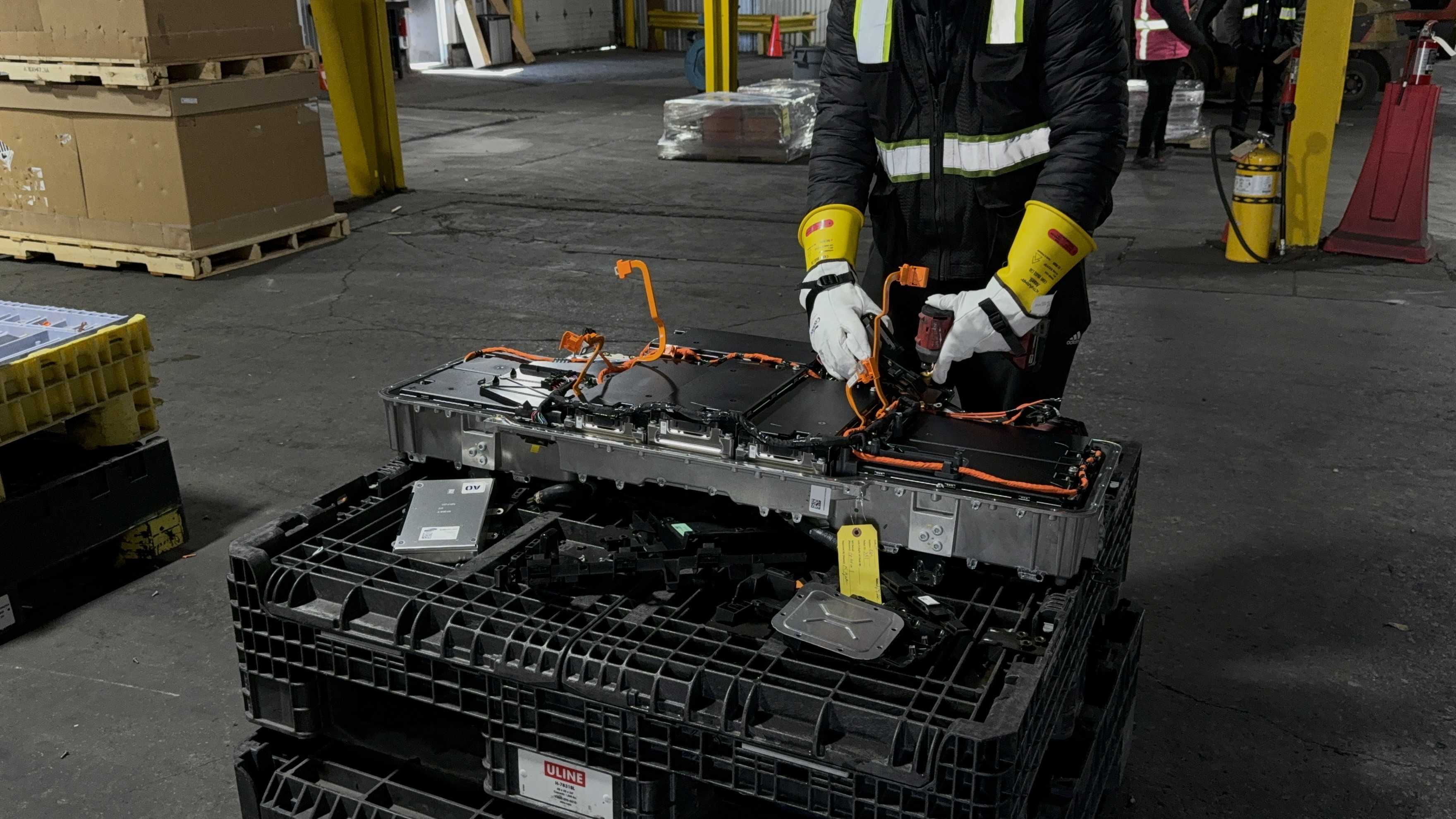
- It serves to reduce the overall size of the battery—from pack to module or cell level—and to remove components that do not contain the targeted active materials (i.e., anode and cathode materials). These include metal housings (often made of aluminum), the battery management system (BMS), and other peripheral parts.
- By sorting out such components early, they can be directed into dedicated recycling streams, while minimizing the number of different materials that enter the shredder. This is essential for impurity control and directly improves the quality of the resulting black mass.
Dismantling processes can be manual, semi-automatic, or fully automated, depending on the battery design, condition, and recycling setup.
In contrast, cell production scrap—such as jelly rolls, cathode foils, or electrode offcuts—does not require deactivation or dismantling and can be fed directly into material separation.
In general, the fewer mixed materials that are introduced into the shredding and separation processes, the cleaner and more efficient the Material Recovery will be.
Degraded condition of end-of-life batteries+
Batteries at end of life are often in poor condition—showing signs of corrosion, mechanical damage, or incomplete repairs. These inconsistencies make it difficult to assess safety and disassembly requirements. This is particularly problematic for automated dismantling systems, which rely on consistent pack conditions to function effectively.
Lack of standardization across battery designs+
Battery packs vary widely in format, assembly method, fasteners, and internal layout. This lack of standardization makes it difficult to develop uniform dismantling strategies. As a result, most dismantling today is manual or semi-automated, which limits scalability and increases labor intensity—especially at lower volumes.
Discharging is not always required, but for many dry mechanical shredding processes, it is critical to reduce the risk of short circuits, fires, or equipment damage. Dry shredding involves no cooling during processing, making stored energy a significant hazard. In contrast, wet shredding uses liquid cooling, which can reduce or eliminate the need for pre-discharge. Some advanced systems integrate deactivation (e.g., water cooling) into the recycling line, allowing charged batteries to be processed safely. However, many facilities rely on pre-discharge—using resistive, electrical, or salt bath methods—for safer handling. Battery chemistry also plays a role: NMC batteries pose a higher thermal risk than LFP, making discharging more important before dry shredding. In pyrometallurgy, batteries can be processed directly without prior discharge, as the high temperatures neutralize stored energy during smelting.
Should batteries be discharged and dismantled before transportation?+
Discharging and dismantling batteries prior to transport can greatly improve safety during both transportation and storage. This approach is particularly recommended for critical or damaged batteries.However, it is not always necessary: not all recycling processes require batteries to be discharged or dismantled beforehand. The decision depends on the specific recycling method, the condition of the battery, and applicable transport regulations regarding state of charge (SOC) and packaging.
Should you discharge a battery pack before disassembling it?+
Discharging a battery before dismantling significantly reduces the risks involved, as the work is no longer performed on a high-voltage or live system. This also lowers the technical requirements for tools, certification, and training.However, in practice, some level of dismantling is usually required before discharging—such as opening the battery housing to access the main positive and negative terminals. A key challenge arises when one or more modules in a pack are compromised.There is currently no universal industry standard for the correct sequence of discharging and dismantling. The optimal approach depends on the specific battery design and must be evaluated individually for each site or recycling process.
Guidelines & Regulations 8 · European Union, United States, Canada+
The Governmental Regulations section outlines key policies and legal frameworks that govern battery production, usage, recycling, and disposal to ensure safety, sustainability, and compliance with environmental standards.
⚠ Please note: This section does not represent a complete or exhaustive overview of all applicable regulations. It is intended for general orientation only and should not be considered legal advice or regulatory interpretation. For detailed compliance guidance, always consult the official legislation or a qualified regulatory expert.
This is one stage of the full recycling workflow
See how Discharging & Dismantling fits into the end-to-end journey from end-of-life batteries to battery-grade materials.
Back to the full guide →